

Cherokee Hotshot Crew Fights Fires
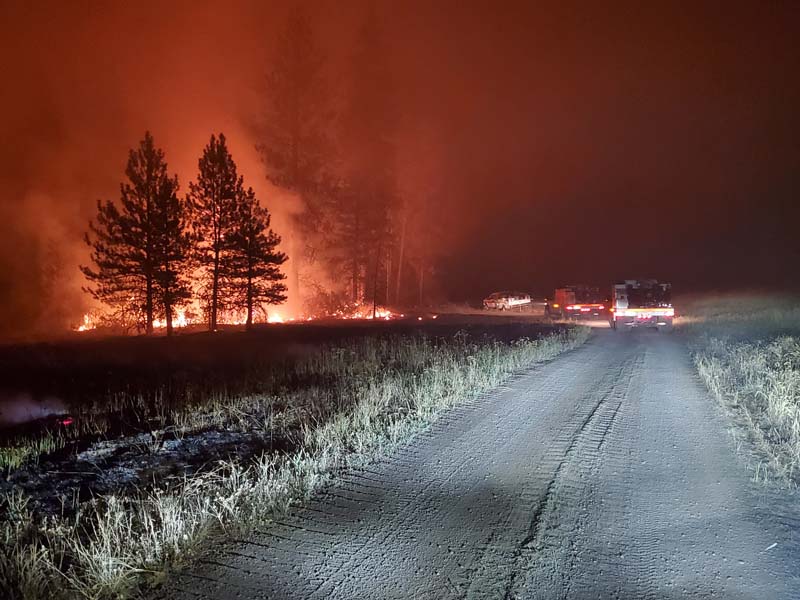
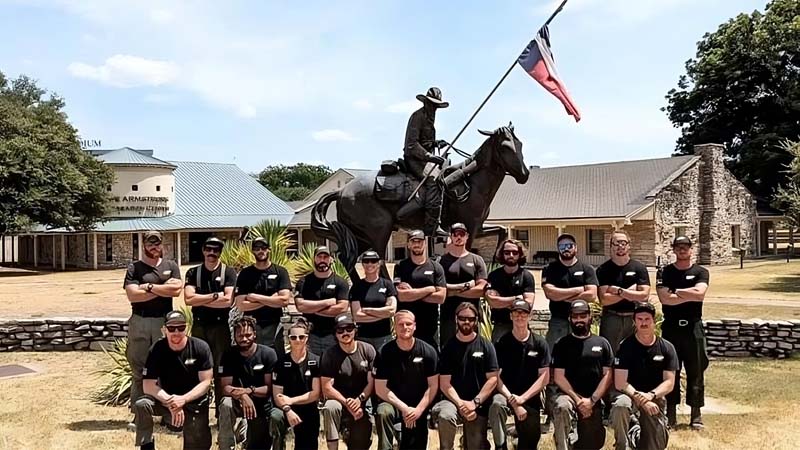
Dalton Miles is a crew member of the Cherokee Hotshots, which is located in the southern United States and currently, his crew is working on the Limepoint Fire. Dalton is from Johnson City, Tennessee. He’s 22 and at first had wanted to be an astronaut, but he said his math skills weren’t good enough, so for the past two seasons, he’s been a member of an interagency hotshot team.
When asked if fighting the Limepoint Fire was different than other fires he’s worked on he said, “The steepness of the terrain and the limited visibility make working on this fire challenging.”
A hotshot team is an elite group of wildland firefighters that respond to large, high priority fires across the country and abroad. They are assigned to work the most challenging parts of the fire and are considered strategic and tactical wildland fire experts.
They are qualified to provide leadership for initial attack and extended attack on wildland fires. They are trained and equipped to work in remote areas for extended periods of time with limited logistical support.
Hotshot crews are considered some of the most highly trained, skilled, and experienced wildland firefighters. They provide leadership for initial-attack and extended-attack on wildland fires. Hotshots are trained and equipped to work in remote areas for extended periods of time with minimal logistical support.
A typical crew has between eighteen and thirty members. They all carry fire shelters that they can get into to save themselves from the fire, should it be impossible to get away.
The National Interagency Fire Center coordinates hotshot crews on the federal level.
Dalton said that those who become hotshots must pass the Bureau of Land Management Fitness Challenge, which requires them to complete a one-and-a-half-mile run, followed by push-ups, pull-ups, and plank exercises. In other words, you need to be in good shape to become a member of a hotshot team.
“We work from March through November, and have the month of June off, to rest or to complete more advanced training,” Dalton said.
Dalton said that because the crew routinely goes to remote areas, they are often taken there by helicopter. They never have to parachute from an aircraft, he said.
On the Limepoint Fire, the Cherokee Hotshots are assigned to the night shift, which means they use LED lights to see what they are doing.
Each member of the team has an assigned task. Dalton is a sawyer, which means he uses a chain saw to cut up logs and brush. His team also has swampers, whose job it is to remove the cut-up material and get it into the green zone, or to a place that won’t burn.
He said the majority of his team members are diggers, meaning it is their job to use hand tools (hoes and pulaskis) to dig down to mineral soil, usually from six inches to one and a half feet.
Dalton said he loves what he does. “I am glad to be working outdoors,” he said.
When asked whether it was hard to breathe with all the smoke, Dalton said that the smoke and the dust make it a challenge. They do not wear masks.