

History of Cambridge Water Tower
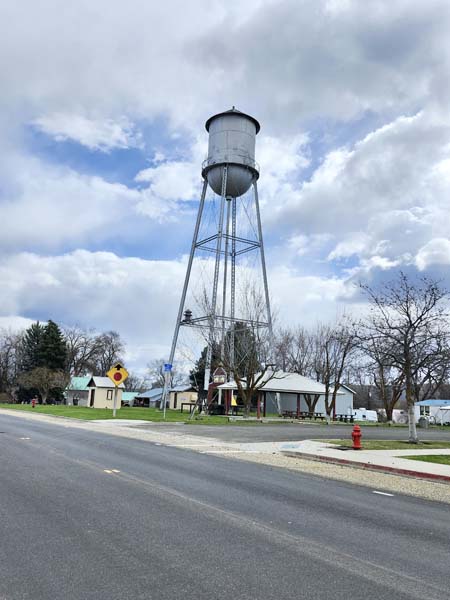
The Cambridge water tower is a landmark in our town, which can be seen from miles away. The tower and its water tank, that was once filled with 50,000 gallons of water and supplied the residents of Cambridge with all of their water needs, is now used as a place to hang the brilliant white lights and stars that help celebrate the Christmas season.
I visited with Gary Franklin to learn more about the water tower. He has lived in Cambridge since he was a small child and knows a lot of local history. Around 1935, the village of Cambridge was involved in a WPA project. (The Works Progress Administration was an American New Deal agency that hired millions of unemployed men, who wanted and needed jobs. Most of these men had no formal education and worked on public works projects.) The goal of the Cambridge project was to put in a public water system with water lines, sewer lines and a water storage tower.
All of the sewer and water line trenches were dug by hand. The men who dug these trenches were employed through the WPA. The men worked hard at digging the trenches that were three to four feet deep in some places, while others were 10-12 feet deep. They did have to do some blasting at the current site of the high school and also where the water tower stands, due to the ground being compacted and rocky.
For the Cambridge water project, the village needed a water tower. A used one was found over by Portland, Oregon. A delegation of local men was sent to check out the water tower, which was disassembled. They determined that it was viable. After the purchase was made, the tower was disassembled further, loaded on a railcar and sent to Cambridge, where it was re-assembled.
This project would become the first public water storage in Cambridge. Prior to the water tower the residents got their water from wells that were dug on their own property. Many of the older houses in town still have outside private wells. Some residents continue to use those wells to sprinkle their lawns.
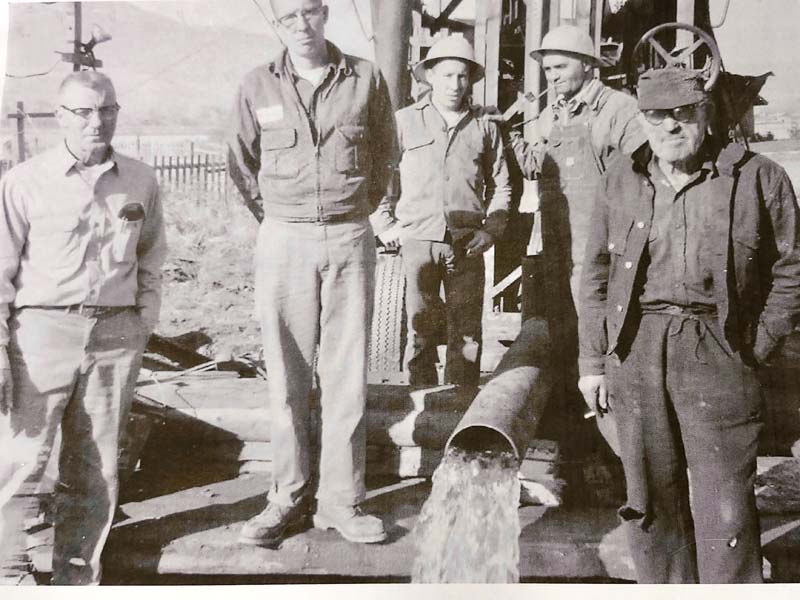
In 1935, there was one well that supplied the village’s water. It was up near the water tower. It didn’t supply a lot of water, and the water it did provide wasn’t the best quality. In the fall of 1962, a well was drilled to a depth of 927 feet, hitting an artesian source. It produced almost 350 gallons of water a minute at outflow.
The water that Cambridge residents use today, came about through the 1978 water project. The project consisted of drilling another well and constructing an additional water storage tank. This well and storage tank provided water and water storage in conjunction with the water tower until 2006, when the use of the tower was discontinued. That ground level tank sits behind the post office, where it’s not nearly as visible as our landmark water tower in Tower Park.
Since 1976, most of the water and sewer lines in Cambridge have been replaced. The trenches were no longer dug by hand, but with the help of modern machinery. Time is hard on concrete and cast-iron pipe. Over time the original sewer lines and water lines rotted or became brittle and cracked. In addition to these issues tree roots were also a problem. The cost of replacing the pipelines was covered by grants and bonds.
The top of the water tank is 120 feet off the ground, and the top of the tower, where the ball is, goes up another six feet to reach a total height of 126 feet. The catwalk on the water tank is around 18-24 inches in width and was part of the tank when purchased. The tank holds 50,000 gallons of water. In 1983, when the Mt. Borah Earthquake near Challis took place and registered 7.3 on the Richter scale, it was felt here in Cambridge. Jack Barinaga, who lived close to the water tower at the time of the quake, told Gary that he could see the water tower sway. When Gary came out of his house, he said it wasn’t swaying, however it was rattling like crazy, but it stood firm.
Over the years there have been issues with kids climbing the water tower. The first physical barrier, was a set of metal plates that was installed by Elmer Fields. Years later, Ernie Houghton added a second set of metal plates, above the first set, which helped further deter climbing. The city also passed an ordinance to discourage climbing. City Ordinance No. 5-1-4, is stenciled on the inside and outside of the four legs of the tower that states, “Climbing Tower Prohibited.”
One other question I had as I wrote this story was when and why Cambridge went from being called a village to being called a city. Before 1967, Cambridge, Council and Midvale were all designated as villages, basically because they were all small. In 1967, the Idaho legislature deciding that all of Idaho’s villages should become legal entities made it possible for all villages to petition, to reincorporate as cities.