

Remembering Those Who Have Gone Before Us
This time of year, in honor of Memorial Day, many of us will make a special effort to remember those who have passed before us. As we visit their final resting places, we observe not only the beauty of this hallowed ground, but also the history. The Cambridge and Salubria cemeteries as well as our surrounding areas are rich in history.
Much of the information in this article came from the Cambridge Museum and my visit with Thel Pearson, who has been an active volunteer of the museum for many years. Over the past forty years, museum volunteers have worked to catalog and research those buried in our local cemeteries and to also identify those graves outside of the cemetery boundaries, known as isolated graves. They have cataloged the Cambridge and Salubria cemeteries and have started working on the Midvale cemeteries.
The exact dates that our cemeteries were established is unknown. An example of this is the story of a lady in the early 1900’s on her death bed looking out towards, what would become the Cambridge Cemetery, and saying that she wanted to be buried over there. As time went by more people were added to the cemetery. Cambridge Cemetery’s official date was 1902, but it already had some graves at that time. Currently, findagrave.com lists the memorials at the Cambridge Cemetery as 881 and at the Salubria Cemetery as 582.
Some interesting and sad history is reflected in the Cambridge Cemetery under the Tuttle family name. Many of us who were raised in this area remember hearing stories from our parents and grandparents about this family. Everyone heard just a little different version of the story. Whether it was green beans or spinach that gave them botulism poisoning, the end result was that six family members died within a week.
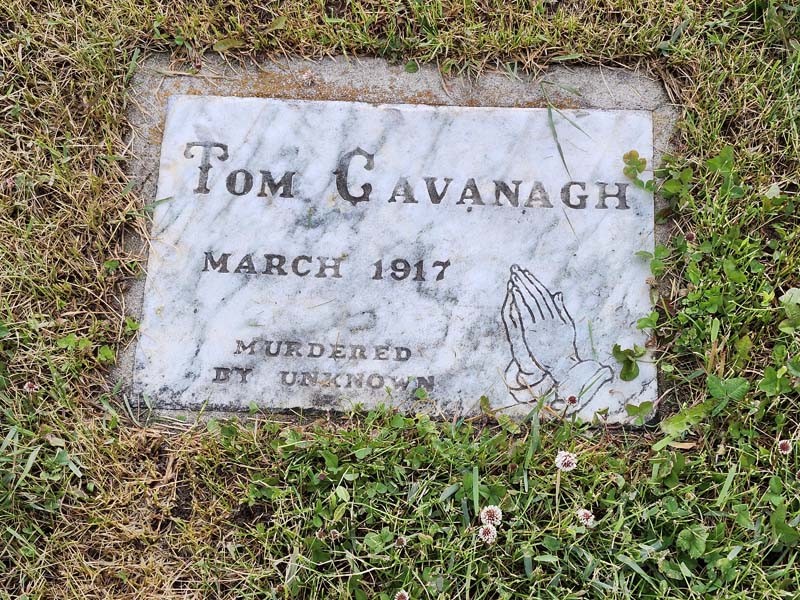
Among the Cambridge Cemetery stones there is also one that states, “Tom Cavanagh, March 1917, Murdered By Unknown.” For those interested in knowing more about Tom Cavanagh, there is a booklet Titled, The Murder of Tom Cavanaugh in Idaho’s Brownlee Country, Presented by Idaho Historical Series. The booklet introduction, written by Don Dopf of Cambridge states, “What you are about to read is the detective’s detailed account of the Tom Cavanagh story as it was published in True West Magazine in 1930.” Our quiet little town does have some fascinating history.
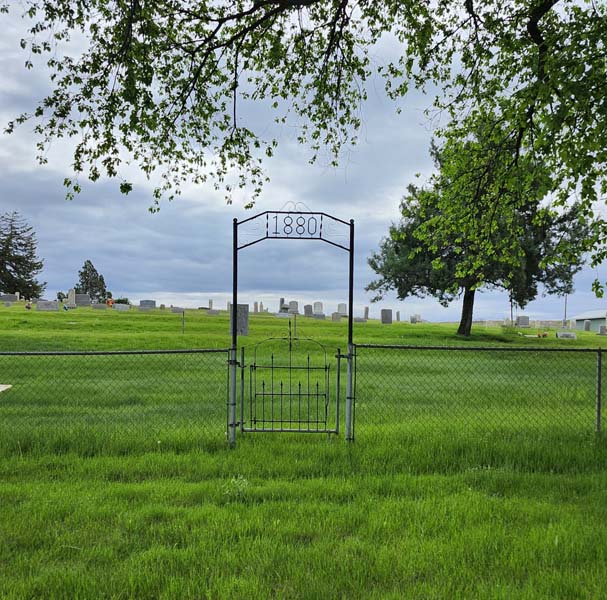
The Salubria Cemetery gate reveals 1880 as the year that it was established. Museum history noted this about the beginning settlers, “The Salubria Valley, first visit by white settlers was in 1868, when the Tim Goodale wagon train, following a subsidiary route of the Oregon Trail, stayed in the valley for ten days. During this stopover, a young girl died and was buried on a hill overlooking the river. The 75 wagons moved on, but the man who had built the coffin returned and took up residence in the valley, and made it his special charge to care for the isolated grave.” Martha Jane Roberts is the name of this young girl, the first white person to be buried in Washington County. She was 18 years old, when she came through with the wagon train and passed away. There is a monument to Martha in Cambridge on the corner of Superior and Hopper Streets, next to the museum.
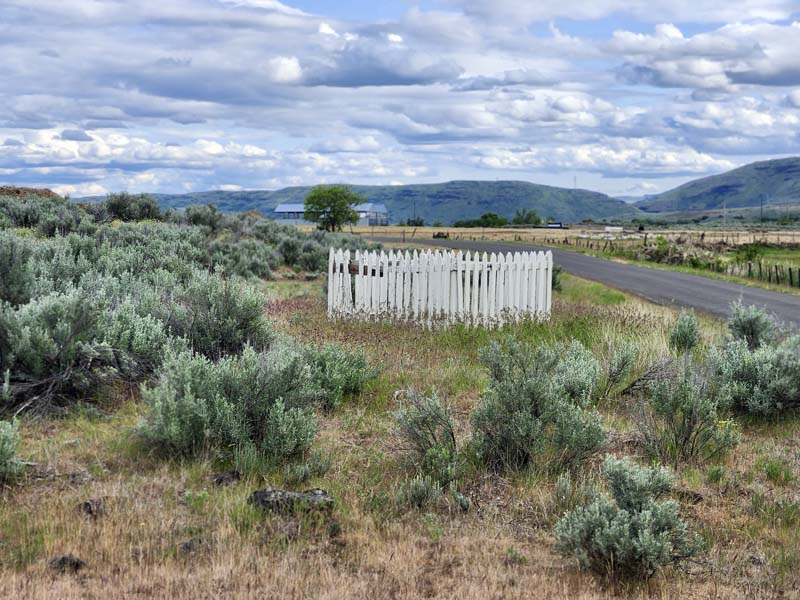
On Rush Creek Road, just out of Cambridge, there is a little white picket fence enclosure along the road. Over the years, many people have wondered what the story is behind this picket fence. Little Dickie Cole, who was born December 5, 1890 and passed away January 25, 1891, is buried there. His grave is significant in that he is buried alone, outside of a local cemetery, and over 130 years later his fence continues to be painted through the kindness of people in our community.
The Cow Creek Cemetery has an intriguing history. The stones from this cemetery were moved and leaned against a fence to protect them from grazing cows and by now those stones are gone, broken apart over time. However, there are family records of those who were buried in that cemetery.
Cemeteries are changing. Family cemeteries are increasing and today many families scatter ashes or retain the ashes of their loved ones at home. Some people do bury the ashes and add a stone. Once a family is given the ashes, there is often no record of what happened to this person. The loss of those records leaves a hole in the history of our communities.
As our county continues to grow, and we have more people moving to the area wanting our way of life, the issue of protecting our farm ground is front and center. Preserving farm ground has been key for as long as cemeteries have been in existence. There are a couple of main reasons that cemeteries sit on hills. One is for good water drainage and the other is to preserve good farm ground.
Over Memorial Day weekend, we remember our veterans and the sacrifice they made for our country. The Veterans of Midvale like to place flags on all of the local veterans’ graves, but they need more flags. If you would like to donate, please send your donation to the Cambridge Museum, PO Box 35, Cambridge, ID 83610. Please note on your donation that the money is for flags for the veterans. The museum will make sure that the veterans receive your donations.