
In 1883 the Union Pacific Railway Company was building the last sections of the Oregon Short Line Railroad. By fall, Chinese crews in the Blue Mountains were laying rails on the section of the line that had started at Portland, and grade building was approaching Baker City. Other crews had started building from Granger Wyoming. The two projects were to meet at Huntington, Oregon. By the end of 1883 construction approaching from the east reached almost to Weiser, which caused extreme excitement all along the Weiser River valleys. Before the Oregon Short Line was built, settlers here had to depend on freight wagons traveling all the way from Kelton, Utah. The first train, cheered by joyous crowds, rolled into Weiser on January 4, 1884.
When the Oregon Short Line reached Weiser, the Union Pacific pulled a dirty trick that it had pulled countless times before and would do so many times in the future – it placed a depot outside of town on land it had acquired. Because a depot always became the center of commerce, businesses were basically coerced into moving close to it. Many towns were destroyed by this tactic and forced to move to the depot.
Weiser City Leader, Jan 12, 1884: “A railroad depot has been settled on the Hull tract across the Weiser river, about two miles from this town by the wagon road, and 1 1/4 miles in a straight line. A building is under construction. It is generally understood that this depot location is only temporary.”
By the end of January, it was becoming apparent that the depot location was not temporary, and people began to worry that a new town was being created. The January 26 Weiser City Leader said there were four buildings at the depot: a “saloon in full blast,” a lumber company office, another office building, and a two-stall round house. The Western Union telegraph office inside the depot served as a vital link to the outside world.
In the Weiser City Leader’s May 17 issue, editor William Glenn wrote an angry editorial in which he blasted R.E. Strahorn “general manager and chief schemer (sic) and trickster” for the Idaho & Oregon Land Improvement Co. Glenn accused Strahorn of trying to defraud Weiser and profit by creating a new town on property bought by the company at the depot and pointed out that this had been the pattern all along the Union Pacific’s lines. Glenn concluded: “Lying, scheming (sic) and misrepresentations have characterized all of Strahorn’s dealings with the people.”
The railroad established a new post office near its depot called “New Weiser.” The U.S. Postal Department denied this name, as it was too close to the existing “Weiser” post office.
In spite of the railroad’s coercion, many Weiser businesses stubbornly refused to move to the depot. Finally when a fire destroyed much of the business section of Weiser in 1890, the town moved west, across the Weiser River to the depot. For some time after the town moved, the original section of Weiser was often referred to as “old town.”
The February 23, 1884 Weiser City Leader mentioned that Tom Price was the discoverer and owner of a soda mine at the foot of Mann Creek grade. In April the Leader said Cal White and William Jennings now had a sawmill and grist mill in Meadows Valley. In its next issue the Leader said Council Valley had a population of about 300 and had a sawmill on Mill Creek.
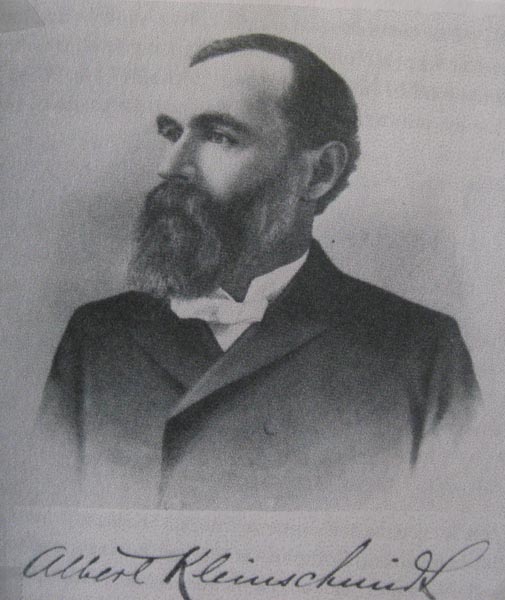
During the early 1880s, the level of mining activity in the Seven Devils Mining District was very low. Albert Kleinschmidt arrived in the District in 1885, but I don’t know exactly when during that year that he started pouring money into investments there. However, that spring there were definite signs of excitement and activity. There was a notable influx of miners / prospectors to the area.
George Patterson had a “stopping place” for travelers called the “Elk House” at Bear.
A new town was said to have been started on Garnet Creek. This must refer to a collection of buildings that included the Blue Jacket Mine office and cook house, along with a number of other buildings along Garnet Creek not far below the Blue Jacket Mine. It was sometimes referred to as “Garnet City” or sometimes as “Blue Jacket Camp.” Calling it a “town” would be an exaggeration, as I’m pretty sure it had no commercial buildings, aside from the mine office.
In May, Charles Morris completed a hotel, which featured a “large corral for prospector’s ponies.”
At this time, the nearest wagon road ended about four miles from the mines. That point was on the main road up Bear Creek a few miles north of Bear, where a small corral stands today. In the summer of 1885, 42 “Seven Devils residents” petitioned the county to build a road from Council all the way to the Seven Devils mines and pledge money or equivalent work toward such a project.
It would be 5 years (about 1890 – around the time Kleinschmidt built his road down to the Snake River– that a road was completed from Bear to the Kleinschmidt road, making a continual road all the way between Council and the mines. Until then, any ore that was transported out of the mines (mainly the Blue Jacket since it was the closest active mine to the end of the wagon road) was packed on mule or horse trains and unloaded into wagons at the above-mentioned spot. From there, wagons took the ore to the railroad at Weiser and from there to a smelter in Montana.
Some of the first ore that Kleinschmidt transported in this way was shipped all the way to England for smelting. (Smelting was the process by which copper ore was reduced in a furnace into actual copper.)
100 years ago
November 12, 1925
Fred Beiser, 35, mill foreman of the Pole Creek sawmill, was found dead in the Adams County jail Thursday morning, with bedding and clothes on the bed afire. The body was burned in several places, particularly on the left hand and along the left side before the fire was extinguished. He was arrested November 4 at Council by Chester Selby, Sheriff, and Carl Swanstrom, prosecuting attorney of Adams County, on a charge of drunkenness and disorderly conduct. The coroner’s jury concluded his death was caused by extreme alcoholism.
A girl was born to Mr. and Mrs. Tom Linder on November 9.
The Snow & Lafferty sawmill at Tamarack was mentioned.
75 years ago
November 9, 1950
Herman Welker, a native of Cambridge was elected U. S. Senator.
Married: Miss Georgia Byrd, daughter of Mr. and Mrs. George Byrd to Robert Doggett, son of Mr. and Mrs. Ruell Doggett.
Married: Miss Joyce Frasier, daughter of Mr. and Mrs. Harry Frasier of Weiser to Emerson Wheeler, Jr., son of Mr. and Mrs. Emerson Wheeler of Midvale.
A girl named Mary and was born to Mr. and Mrs. Nelson Foster at the Weiser hospital.
A dance was held to initiate the new Indian Valley Hall Friday night. “There is much to be done before it is completed.”
“Bill Howland and sons are remodeling the Lookout clubhouse and repairing the foundation. The clubhouse has been rented to homemakers for the past several years to relieve the housing shortage in Cambridge tenants are still occupying the house.”
Sunday school will be held at the Valley View schoolhouse.
Mr. and Mrs. Boyd Mink of Stibnite were Cambridge visitors Saturday.
49 years ago
November 11, 1976
Swine Flu immunization shots will be offered in Midvale on Monday.
The bell purchased for the Indian Valley school in 1902 was recently mounted on a concrete slab at the old school grounds. The old bell remained in the same building until the new block school was built. When the old school building was sold, the Bell was retained with the understanding that it would be installed on the school grounds.
People of the Midvale area approved the formation of a fire protection District by a vote of 217 for, and 105 against.
Died at Lostine, Oregon: John Jones, formerly of Cambridge.
Died at Weiser: Carl A. Linder, 82, formerly of Midvale. He was born in 1894 at Salubria.
25 years ago
November 16, 2000
A boy named Jesse was born to Jr. and Kristy Cornia on October 17.
Died: Doris Castle, 85 of Midvale.
Students spent Friday moving into the new Cambridge High School.