
I’m continuing with Chuck Wolfkiel’s memories of growing up on a ranch on the Middle Fork of the Weiser River in the 1940s and ‘50s. His parents, Charles W. and Mildred Wolfkiel, moved to “the next to the last place before the mouth of the Middle Fork” in 1946, when Chuck was about 6 years old.
I will put Chuck’s written memories within quotation marks. Sometimes I will put them in italics to help set them apart from my comments.
“There was one evening in the fall when the wild salmon were heading up the main Weiser River to spawn. Most all of our neighbors gathered – with gigs, spears and 6-tine manure forks, Coleman white gas lanterns with barn door shaped coffee can shields and some liquid fortifications – and came to harvest some of those same salmon. The plan was to enter the river below the Middle Fork and line up across the river, and then wade upriver with lanterns focused down on the water to see the sleeping salmon and spear some and then throw them on the bank to be retrieved on the way back. One guy was posted on the bank to observe our yard light about a 3/4 mile away, to make sure it was on. If mom had turned it off then we’re to scatter, as someone, maybe the law, could be coming! There were approximately 8 to 10 men and boys involved as I recall.”
“I remember harnessing Dick & Dolly, our quarter horse work team, to pull the hay bobsled in the winter to feed the cattle. In the summer too, sometimes, to mow, but also to run both the dump and the buck rakes. We stacked hay in the haystack, with a Hydra Loader / stacker on a WD Allis Chalmers tractor in the field. For the barn we hand loaded the hay wagon pull by Dick and Dolly, in the field, to put hay in the barn using a trolley on a track, cable and Jackson fork system, power by me driving a 3rd horse (Pet), and waiting for voice commands, i.e. ‘Ready’ or ‘Dump’ to know which direction to move the horse.”
“I remember Going up to mountains to cut Tamarack trees to make fence posts, splitting the trees into posts, then treating them with Penta-treat mixed with diesel, in a 55-gal drum, for the post portion going into and slightly above ground level.” This was standard practice for ranchers. However, Penta (pentachlorophenol or “PCP”), a wood preservative, is being phased out and is no longer being manufactured, sold, or distributed in the United States as of 2022, due to health risks and the availability of safer alternatives.”
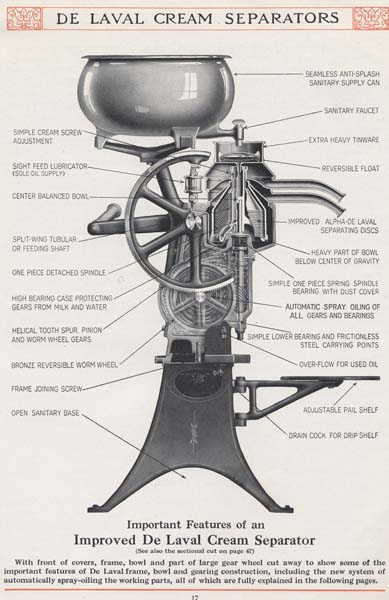
“I helped with milking our milk cows, of which we had 8 to 10. Until we had electricity to the barn, we did it by hand, but then eventually we had a DeLaval milking machine. This was at a time in the early 1950’s when beef prices were so low that we had to sell cream, then later when a milk route from Payette was established, we shipped milk there to help make ends meet. We had a hand crank cream separator to separate the cream from the milk, then we shipped the cream in a 5 gal can to Denver via the Pacific, Idaho & Northern Railroad (PIN Railroad). It was my job to assemble the cream separator in the evening for the evening and morning milkings, then disassemble it after the morning milk had been separated for mom to wash and sanitize.”
“I remember helping dad butcher our winter beef each fall, then of the family harvesting a flock of our farm chickens, i. e. chopping off chicken heads, scalding in a bucket of very hot water, plucking stinky wet feathers and singeing them with burning newspaper, before mom butchered them and prepared them for the freezer.”
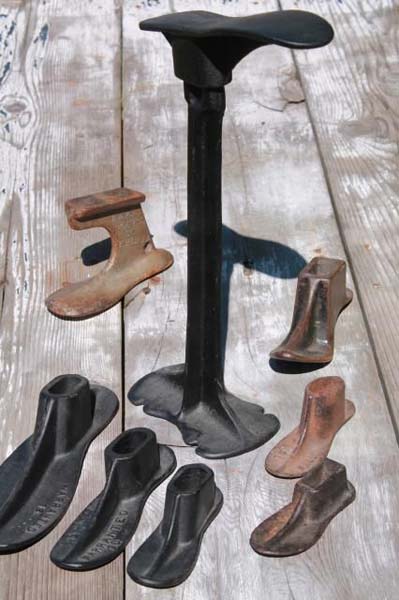
“We were not a prosperous ranch, being able to only pay interest on the mortgage and no principle. We had to make do with what was available. Mom made my sister’s dresses and my shirts from 50# flour sacks that came in prints and other patterns and were in vogue at that time. Mom made Denim quilts from worn out blue jeans and dad had a shoe last for repairing our shoes. Patches on clothes were not an option but the norm, including darning holes in our socks. Recycling and salvaging were the norm or doing without.” This was very likely how many rural families made ends meet in those days.
“I remember watching the county workmen, as they were dismantling the original bridge over the MF Weiser, from the road that ran between the MF School and The CCC Work Camp. The day I was there they were using axes to chop out bolts that secured the decking to the bridge structure.” This bridge was at the foot of the Moser Grade, the road started by George Moser in 1876, down the north side of Mesa Hill. This iron bridge was removed in 1922 and reinstalled on the West Fork of the Weiser River, west of Fruitvale by John Bast and my grandfather, E.F. “Jim” Fisk. This bridge was removed (and replaced) in 2023 and the county sold it.
Continued next week.
I will be giving a presentation about the P&IN railroad, plus a little about the Idaho Northern RR, on June 5 at 6:00 p.m. in McCall at the “Carpentry shop” in the historical area just across the street east of the hospital (1001 State St.). Also, on June 24, I will give a major presentation about Mesa Orchards at the New Meadows depot, featuring over 100 photos, some of which were only recently discovered.
100 years ago
June 12, 1925
Cambridge – “An eight-inch concrete water pipe has been laid for the benefit of those living in the south part of town. A similar line was put in for the benefit of those in the upper part of town last year.”
“Two cars of wool were shipped out Wednesday, consignment being made by the Richardson Brothers of Indian Valley.”
“A road show company, Lovette’s Novelty Trio Entertainers, performed Wednesday evening at the Elk Hall.”
“A party of Cambridge people in the Jewel and Adams cars made a run up West Fork Monday night in quest of salmon. It is by far the best catch made this season. The count showed 19 mammoth fellows.”
Advertisement: “Our new service station is ready to serve you now – The Cambridge Garage & Service Station – Craddock & Son, proprietors – Cambridge.”
Died: Mrs. Sarah Wylder of Portland, Oregon, who was here visiting her daughter, Mrs. O. L. Farrens. Burial in the Cambridge Cemetery.
Died: Joseph B. Rickart, age 77, a Civil War veteran of the Dixie area. He was born in 1848 in Illinois. Burial in the Cambridge Cemetery.
75 years ago
June 8, 1950
Married: Betty Armacost (daughter of Mr. and Mrs. Earl Armacost) and Dean Perkins (son of Mrs. Orvil Perkins of Midvale).
A picture of Eddie Ludwig signing with the St. Louis Cardinals was released by the Associated Press Wirephoto Service and published in leading newspapers from coast to coast.
Married: Jean Thomason of Cambridge (daughter of Mr. and Mrs. Monroe Thomason) and Herbert B. Mink of Weiser (son of Mr, and Mrs. Fitz Mink)
An investigation is underway to explore whether Midvale and Cambridge high schools should be combined or operated separately. One possibility would be to build a new high school midway between the two towns. (Long article in this issue of the Record-Report.)
49 years ago
June 3, 1976
Three members of a Cambridge family were killed, and the fourth injured, in a house fire. The victims were John Higgins, 60, longtime Cambridge area rancher; his wife, Anna, 59, and their nine-year-old son Paul. Michael Higgins, 17, escaped by breaking out a bedroom window.
A daughter named Jessica was born May 27 in the Council hospital to Mr. and Mrs. Ralph Yantis of Indian Valley.
25 years ago
June 8, 2000
Died: Edna F. Moritz, 90, at Weiser.
“Trusses are rising skyward on the new Cambridge High School. Next Tuesday and Wednesday workers will be cutting Highway 71 to run propane lines from the new school across the road to the new propane tank site.”