By the spring of 1868 the Civil War had been over for 3 years. The South had been devastated by the war, with nearly a quarter of the men between 20 and 24 years old having died, either in battle or from disease. Another source says one in five white southern men of military age did not survive the Civil War. Quite a number of people fled the South and headed west to places like the new territory of Idaho that had been created in 1863.
By 1868 the Salubria and Indian Valleys had a number of settlers. A steep set of hills along the Middle Fork of the Weiser River, which geologists think was created by alluvial wash from Council Mountain, (including what would later become known as Mesa Hill) formed a barrier to wagon travel that limited settlement of the Council Valley to a few single men who trapped and/or prospected.
As Idaho Territory became invaded by non-natives, the remoteness of Council Valley led to a huge trade rendezvous of Indians from all over the West being moved here from its former location somewhere between the mouth of the Boise River and the mouth of the Weiser River. It isn’t clear exactly when this move happened or how long the gatherings here lasted. They may have only been held here for 3 or 4 years before the valley got too occupied by non-natives – not for centuries, as depicted by some accounts.
Because the main trail from the lower country to the gold camps of Florence and Warren followed the Weiser River, hundreds of pack trains and individual prospectors passed through the valley in the 1860s. Those travelers witnessed the huge groups of Indians who gathered here. Perry Clark, a member of the Idaho Territorial Legislature and later an Indian Valley school teacher, described what he saw near the present town of Council. He said that from on top of the little hill just north of present day downtown, he could see “many hundreds of Indians and thousands of head of Indian horses at one sight, literally covering the valley as a blanket.” Clark never actually lived here, but he named the place “Council Valley” because he incorrectly thought these gatherings were Indian “Council” meetings. (When a town later developed here, the post office was named “Council Valley,” which was later shortened to “Council.”)
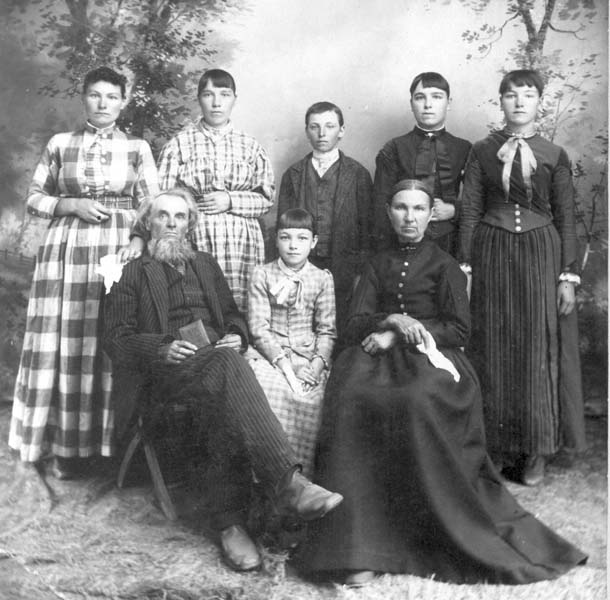
In 1876 George and Elizabeth Moser and their children – the first family to settle in the Council Valley – managed to take a wagon over Mesa Hill by borrowing a plow and using it to make a furrow in which to position the uphill wagon wheels in order to make it around the sides of those inclines. The basic route that the Mosers established was used as the only road between Indian Valley and Council Valley up until about 1920, and it is still visible on the north side of the hill in the first canyon east of the present highway. It cuts down the hill and across the old paved highway. If you look about 300 yards up the Middle Fork from the present highway bridge at the base of Mesa hill, you can see the abutments for the bridge that the old “Moser grade” used.
The year the Mosers arrived (1876) was when Custer met his demise in Montana, and the following two years would bring abject terror to the settlers in central Idaho. The Nez Perce War in 1877 sent the few residents of the Council Valley south to hastily-constructed forts at Indian Valley and near Salubria. Similar panic and fort construction spread at least as far south as Emmett. The fear was that a “general outbreak” of hostilities would unite all the tribes in the region in an attack on all settlers. Of course this never happened, and the people in our area were never actually threatened.
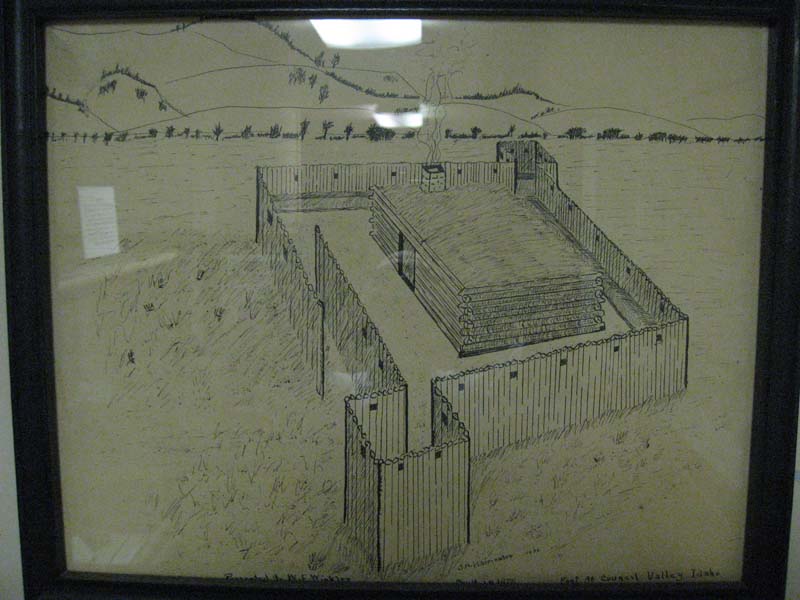
However, the following year (1878) the Bannock War actually did involve local Indians and was a whirlwind of violence that passed south of here and over into Oregon before the slaughter ended. This war prompted the few settlers in the Council Valley to build their own fort just northwest of present-day Council.
Next week I’m going to start a series about the Winkler family, who arrived here in 1878 and were some of the earliest settlers here.
100 years ago
November 9, 1923
Married: Glenn H. Johnson and Miss Ruby Shannon, both of Cambridge.
“The post office at Goodrich, Idaho will be discontinued after the 15th of this month and mail heretofore going to that place will come to the Cambridge office.”
75 years ago
November 11, 1948
Married at Midvale: Miss Oretha Snapp, daughter of Mr. and Mrs. John Snapp, and David Deakins, son of Mr. and Mrs. Charles Deakins of the Oregon Side.
Died at Caldwell: John James Marsh, 77, formerly of Cambridge.
A girl named Marilyn Jean was born to Mr. and Mrs. Bert Wilson of Midvale at the Weiser hospital on November 6.
Grays Creek – Don Moritz and Esther Reimer were married at Winnemucca, Nevada.
Died at the Council hospital: Frank W. Maupin, 66, a resident of Idaho since 1908. He had owned and operated the Mann Creek store from 1939 until a few months ago.
Died at Nampa: Mrs. Mary A. Smith, 85, a pioneer resident of Cambridge.
49 years ago
November 14, 1974
Married in Boise on October 11: Miss Pauline Faye Cada, daughter of Mr. and Mrs. Tony Cada, and Fred J. Nye of Malta, Idaho.
25 years ago
November 12, 1998
Richard and Connie Paul are the new pastors for the community Baptist Church at Midvale.
In a letter to the editor about Y2K: “The nightmare is already beginning to unfold as predicted. The rush to get out of the city and into the country is now accelerated and led by the computer programmers themselves. Many government workers I personally know are quietly preparing. Even the wealthy are crating the mansion on the Hill for self-sufficiency out in the sagebrush.”
Died: George Stikney of Washington, formerly of Cambridge in the 1930s.