
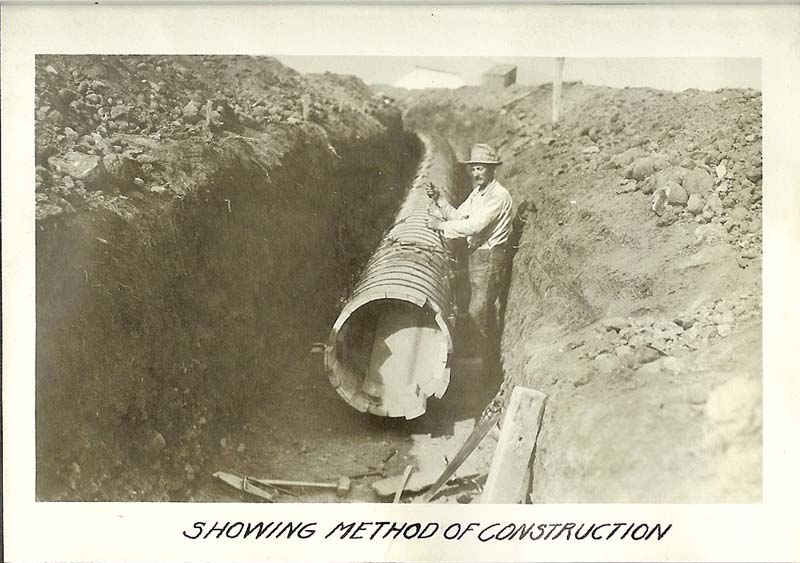
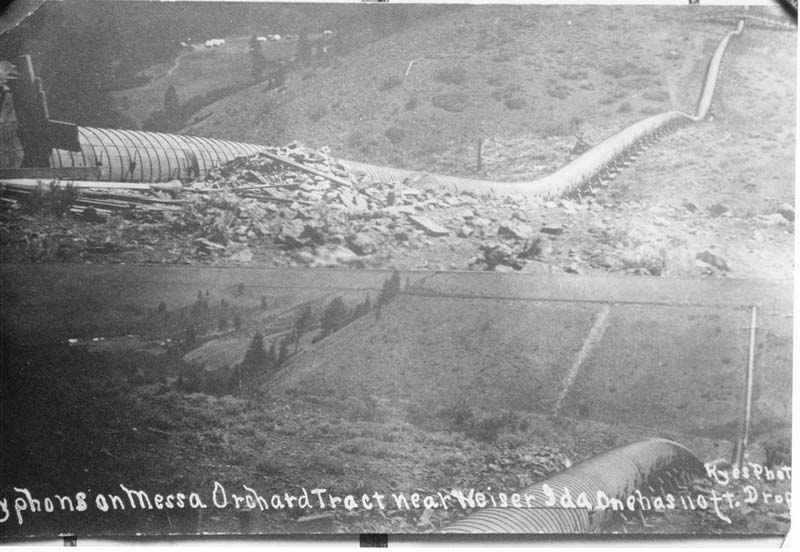
A Weiser Valley Land & Water Co. document that seems to date to 1910 stated: “The first subdivision of one thousand acres is nearly all plowed and most of it has already been planted and the remainder will be planted in a few days. The flume is being built at the rate of over one thousand feet a day.”
The document mentioned that the “first unit” was the Council Mesa, and units 2 and 3 were near Cambridge/Midvale and Weiser respectively. “Total Land: Owned in fee – 2200 acres; Controlled – 3680 acres; To be purchased – 640. Total – 6,520 acres.”
The next two pages of the document contain cost and income figures for the Second Unit – land near Cambridge and Midvale, and the Third Unit – land near Weiser. In the second unit, they figured they could buy 15,000 acres for $3,595,000 (over $82 million today) and sell them after providing water and electricity, and planting fruit trees at a profit of $2 million ($50 million today). The estimates for the third unit were very similar. Where the money would come from didn’t seem to even be an issue.
But that attitude soon met head-on with reality. By the fall of 1910 all work at Mesa had stopped for lack of funds. The flume line and irrigation system were only partially built, the contractors had not been paid, and liens had been filed for large amounts.
I mentioned in a previous column that the initial financing of the Council Mesa Orchards involved selling $300,000 worth of bonds. At least some of those bonds had now matured, and the company needed to pay the purchasers their invested amount plus 6% interest. The bond payments due totaled $175,800.
Myderse Van Hoesen used a different dollar figure (explained later) when he later wrote: “Everything went along nicely until the first installment of old bonds became due. It was then discovered that the greater portion of the $220,000 of mortgages against which the fist bonds were issued were accommodation mortgages merely, made by members of the Company and clerks and stenographers without any intention of paying them and for the sole purpose of getting bonds certified and issued against them.”
It appears to me that the insiders in the company claiming “accommodation mortgages” was a case of, “I’m good for the money; trust me.” They made it look like they had invested in the company’s bonds, but it was just on paper to make it look like the company had enough money.
Several documents and letters mention the orchards being taken over by “new owners,” but it isn’t clear exactly who they were. The company installed a new board of directors, some whom were already officers in the company. C.K. Macey became the Secretary and David W. Van Hoesen became President.
David W. Van Hoesen, was probably already an investor in the orchards. He was a lawyer with the law firm of Kellogg & Van Hoesen at Cortland, New York (about 20 miles south of Syracuse). He was also president of the Cortland County Traction Company, Treasurer of the Wallace Wall Paper Company, and Director of the Ekenberg Company and the Cortland Silk Company. His two sons, Mynderse and Enderse Van Hoesen would later join the orchard management team.
J.P. Gray, who was still with the company, also had roots in Cortland, and had resigned from positions as Superintendent of the Cortland Water Works Company and the Homer & Cortland Gas Light Company in order to manage the Mesa holdings.
Unsigned letter from Cortland, NY: “When the present owners took over the project in the fall of 1910, there had been issued and was then outstanding $175,800 of first mortgage bonds. They were in form a first lien upon a large tract of orchard land and upon the water supply and irrigation system therefore. That land was supposed to have been planted with apple trees and to have been sold to bona fide purchasers at not less than $500 per acre. There had been so deposited against the bonds then outstanding about $220,000 of mortgages, apparently covering nearly 600 acres of growing orchard.
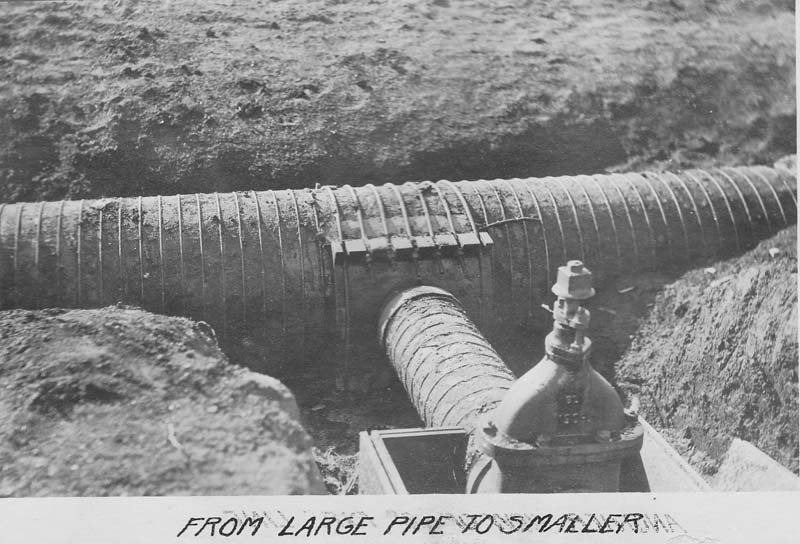
“Instead of being a flourishing enterprise, it more nearly resembled a mass of ruins. The flume line and irrigation system were only partially constructed and the contractors had not been paid and liens had been filed for large amounts. All work had been stopped for lack of funds and the whole proposition seemed to be headed for the rocks.”
Next week: The new owners reorganize the company’s finances.
100 years ago
June 13, 1924
“A car load of Merry Modern Woodmen went to Council on Wednesday evening to help initiate a number of Council boys in the Woodmen and assist them to ride ‘Old Billy’.”
The Modern Woodmen Camp of Cambridge initiated about a dozen men into the Mysteries of Woodcraft.
Died: Charles R. Johnson of Midvale. Born in Illinois in 1859, he came to Midvale in 1901 where he resided most of the time since. Interment in the Midvale Cemetery.
In six days the Cambridge Cream Association received 88 cans of cream containing 2,584.59 pounds of butterfat.
“Thursday morning the new bus to be used on the P. & I. N. made its trial trip to New Meadows. This car was built especially for the local road and is the first of its kind in the Northwest, if not in the United States.
Sam Pfenning of Midvale and Miss Nellie Lanborn of Caldwell were married at Caldwell last Tuesday.
75 years ago
June 16, 1949
Married: Mrs. Teresa Collins and Paul Favre.
A girl named Margaret May was born to Mr. and Mrs. Dick Adams at the Council hospital on June 9.
Married at Midvale: Vivian Lee and Howard E. Keithly, Jr.
Indian Valley – “The sand hill families are to have the electric line extended to their homes.”
Indian Valley – Ivy Anderson ran the post office Tuesday while Mrs. Thorpe and other ladies worked on the hall.
“The Midvale town baseball team were losers in the game Sunday at Riggins. Midvale will play Council on June 19.
Midvale: “James Qualls is enjoying his vacation from the post office. Mrs. Scott Qualls is substituting for him at the post office.”
49 years ago
June 19, 1975
“The Mann Creek Ranger Station, which has stood on Mann Creek since the early 1930s, burned to the ground.”
25 years ago
June 17, 1999
Last week a federal judge dismissed all counts in a year-old civil complaint by Ronald and Betty Blendu against Friends of the Weiser River Trail and ordered the Blendus not to interfere with the sponsor organization’s use of the corridor.
Died: Virginia Lee Ennis Bridwell, 80. She taught at the Midvale school for 20 years.
To be married July 10: Nikki Jo Ivey and Ryan Kienitz.